Sidra Medicine and Qatar Museums Investigate Evidence of Spina Bifida in Ancient Qatar
Multidisciplinary research collaboration combines archaeology, advanced imaging, and clinical expertise to explore the history of a condition affecting children today
Doha, Qatar – 28 October 2026: Sidra Medicine and Qatar Museums are leading a multidisciplinary research project that brings together archaeology, advanced medical imaging, and molecular research to investigate the lives and health of Qatar’s prehistoric populations. The project has identified skeletal remains displaying evidence of spina bifida, a congenital condition affecting the development of the spine.
Conducted in collaboration with international research institutions, archaeological excavations at Umm Al Maa and Al Kharsaah in Qatar have uncovered skeletal remains that are helping researchers investigate the biological characteristics, health conditions, and lifestyles of ancient populations.
The research highlights a connection between Qatar’s archaeological heritage and modern medicine. The collaborative effort offers an opportunity to explore the presence of spina bifida in bones from thousands of years ago.
Bringing Ancient Discoveries into Modern Medical Research
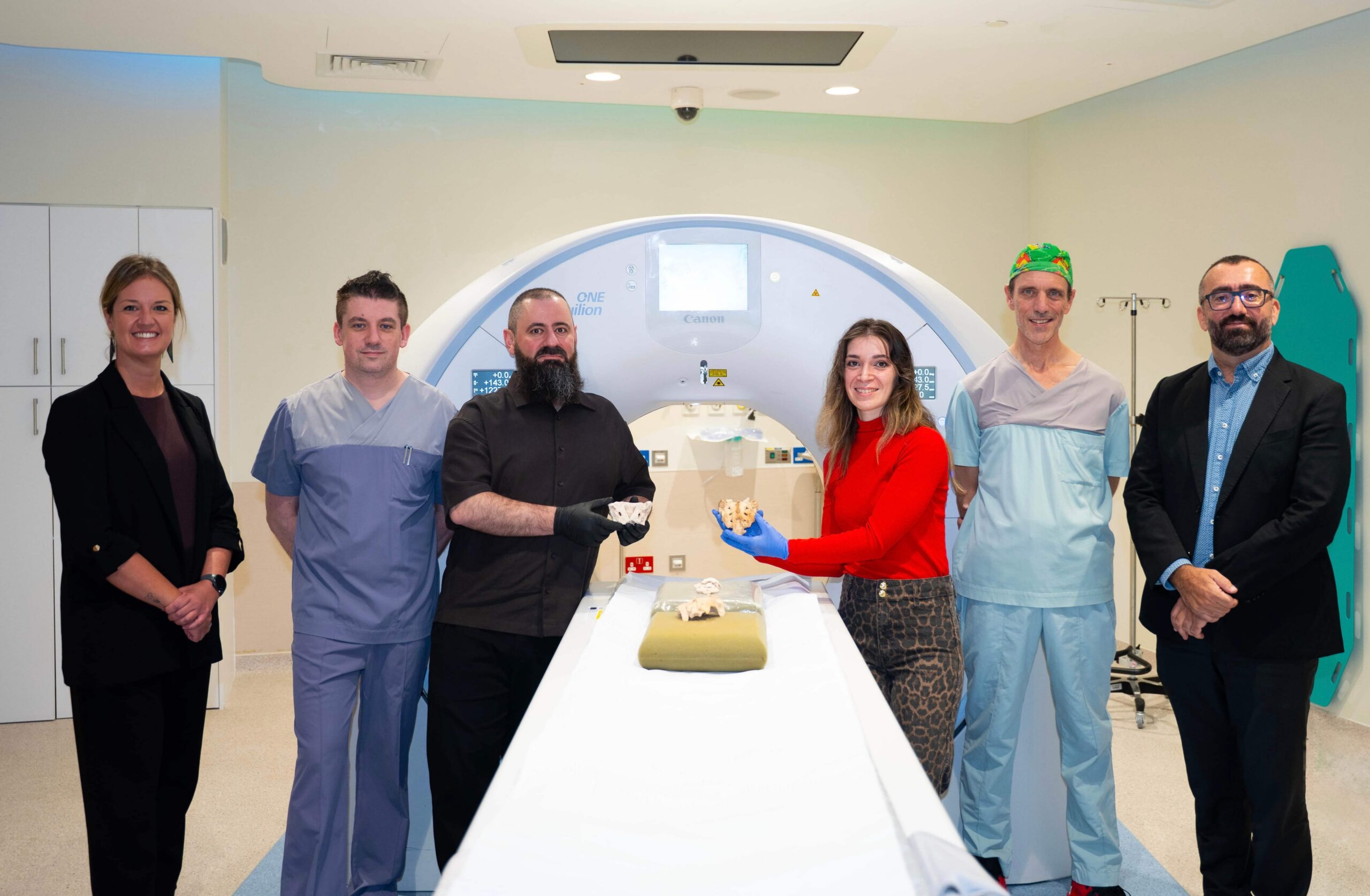
As part of the investigation, archaeological skeletal remains were brought to Sidra Medicine’s Radiology Department for advanced computed tomography (CT) scanning, three-dimensional (3D) reconstruction, and 3D printing.
These technologies allow researchers to examine the internal structures of fragile skeletal specimens in exceptional detail without damaging or altering the original remains. The resulting digital reconstructions provide valuable insights into anatomical characteristics and enable researchers to investigate abnormalities in greater detail.
Of particular interest are the sacral bones, located at the base of the spine, which are often better preserved in archaeological specimens due to their greater resistance to degradation over time. The researchers identified evidence of spina bifida through the initial examination of the remains, while advanced CT imaging enabled a more detailed assessment of the condition’s anatomical characteristics and helped define the specific variant.
Dr. Sara Tomei, Principal Investigator of the research project at Sidra Medicine, said: “This project demonstrates the remarkable possibilities that emerge when different scientific disciplines come together. By combining archaeology, advanced medical imaging, and molecular research, we have an opportunity to uncover new insights into the people who lived in Qatar thousands of years ago.
Vladimir Bahun, Computed Tomography Supervisor at Sidra Medicine, said: “Every one of these bones is irreplaceable, so our priority was to obtain as much information as possible while minimizing physical handling. CT imaging allowed us to examine the internal structures without damaging the specimens. The images also helped researchers distinguish between the anatomical characteristics of the condition and changes that occurred over thousands of years of burial.
“The digital scans provide a lasting scientific resource that researchers at Sidra Medicine and our partner institutions can revisit as new questions emerge, without disturbing the original bones. The 3D-printed replicas can also support teaching and public exhibitions, allowing more people to engage with Qatar’s prehistoric heritage while ensuring the original remains are preserved.”
Sidra Medicine’s imaging services also extends to non-human archaeological specimens, supporting the project’s broader investigation of biological remains and ancient environments.
Understanding Spina Bifida Across Generations
Spina bifida is a neural tube defect that occurs when the spine and spinal cord do not develop properly during early pregnancy. Depending on its type and severity, the condition can affect mobility, bladder and bowel function, and other aspects of a person’s health, sometimes requiring lifelong multidisciplinary care.
Sidra Medicine is home to Qatar’s only dedicated multidisciplinary pediatric spina bifida team, to provide specialized clinical care to patients living with the condition. The team are also actively involved in advancing research into the condition through initiatives such as a national patient registry, a biobank, and genetic profiling of affected children and their families.
The discovery of ancient skeletal remains displaying characteristics associated with spina bifida offers an additional dimension to this research. By studying the condition’s historical presence in Qatar, researchers hope to build a broader understanding of its occurrence across different populations and time periods.
Dr. Santiago Vallasciani, Division Chief of Urology at Sidra Medicine and member of the multidisciplinary spina bifida Clinic, said: “Understanding the history of spina bifida in Qatar adds an important perspective to the work we do with children and families today. Discovering evidence of this condition in ancient populations reinforces the value of studying its biological characteristics, potential risk factors, and occurrence across generations.
“By connecting archaeological discoveries with ongoing clinical and genetic research, we have an opportunity to raise awareness of spina bifida and contribute to a deeper understanding of the condition, including approaches to prevention and long-term care.”
According to the research team, the proportion of skeletal remains displaying evidence of spina bifida at the examined archaeological sites in Qatar appears higher than that reported in certain archaeological studies conducted in Europe. While these observations highlight the potential significance of the findings, further analysis is required to understand the differences between the populations studied and the factors that may have contributed to them.
Connecting Scientific Innovation with Qatar’s Cultural Heritage
Beyond the investigation of spina bifida, the wider research project seeks to understand the origins, migration patterns, dietary habits, and environmental adaptations of populations that inhabited Qatar in prehistoric times.
Dr. Ferhan Sakal, Head of Excavation and Site Management Qatar Museums, said: “As archaeologists, we are not only studying bones or artefacts, we are trying to understand the lives of real people. The individuals represented by these remains were not simply archaeological specimens, but members of families and communities who lived, travelled, adapted, and faced many of the same challenges we encounter today. By bringing together expertise from Qatar Museums, Sidra Medicine, and our partners in Italy, France, and Turkey, we are able to explore these human stories in ways that would not be possible within a single discipline, creating a deeper connection between Qatar’s communities today and those who lived here thousands of years ago.”
By integrating archaeological findings with advanced imaging and molecular techniques, the researchers aim to build a more comprehensive picture of how these communities lived, adapted, and experienced health and disease.
The collaboration reflects Sidra Medicine’s commitment to multidisciplinary research and demonstrates how expertise developed within a modern healthcare institution can contribute to scientific discoveries beyond the clinical setting.
Through its partnership with Qatar Museums and international research institutions, Sidra Medicine is helping bring together medical science and archaeology to generate new knowledge about Qatar’s past while supporting research that may inform healthcare for future generations. This project is supported by the Qatar Research, Development and Innovation Council (QRDI Council) under grant ARG01-0508-230094.

Our Insurance Partners
Our Insurance Partners