Sidra Medicine Contributes to International AI Study Advancing Neonatal Care
11 November, 2026
Published in Nature Biomedical Engineering, study demonstrates how AI models trained on adult medical images can be adapted to improve neonatal care
Doha, Qatar –11 November 2026: Sidra Medicine, a member of Qatar Foundation, has contributed to a major international study demonstrating how artificial intelligence (AI) models originally developed for adult patients can be adapted to support neonatal care. Published in the high-impact journal, Nature Biomedical Engineering, the research highlights a promising approach to improving the accuracy of AI-assisted medical imaging for newborns.
Titled “Repurposing Adult AI Radiograph Models for Neonatal Care Through Continual Learning: An International Multicenter Study,” the study featured input from 30 neonatal intensive care units across 20 countries and territories. Conducted through the Medical AI Data for All (MAIDA) initiative at Harvard Medical School, the research examined how existing AI models could be adapted to meet the specific needs of newborn patients while protecting patient data privacy.
Despite the growing use of AI in medical imaging, most commercially available models have been developed using adult patient data. Fewer than one in five are cleared for pediatric use, creating a significant gap in the availability of AI tools designed for children and newborns. The study sought to address this challenge by investigating whether existing adult-trained AI models could be adapted for neonatal applications without requiring hospitals to share large volumes of patient data.
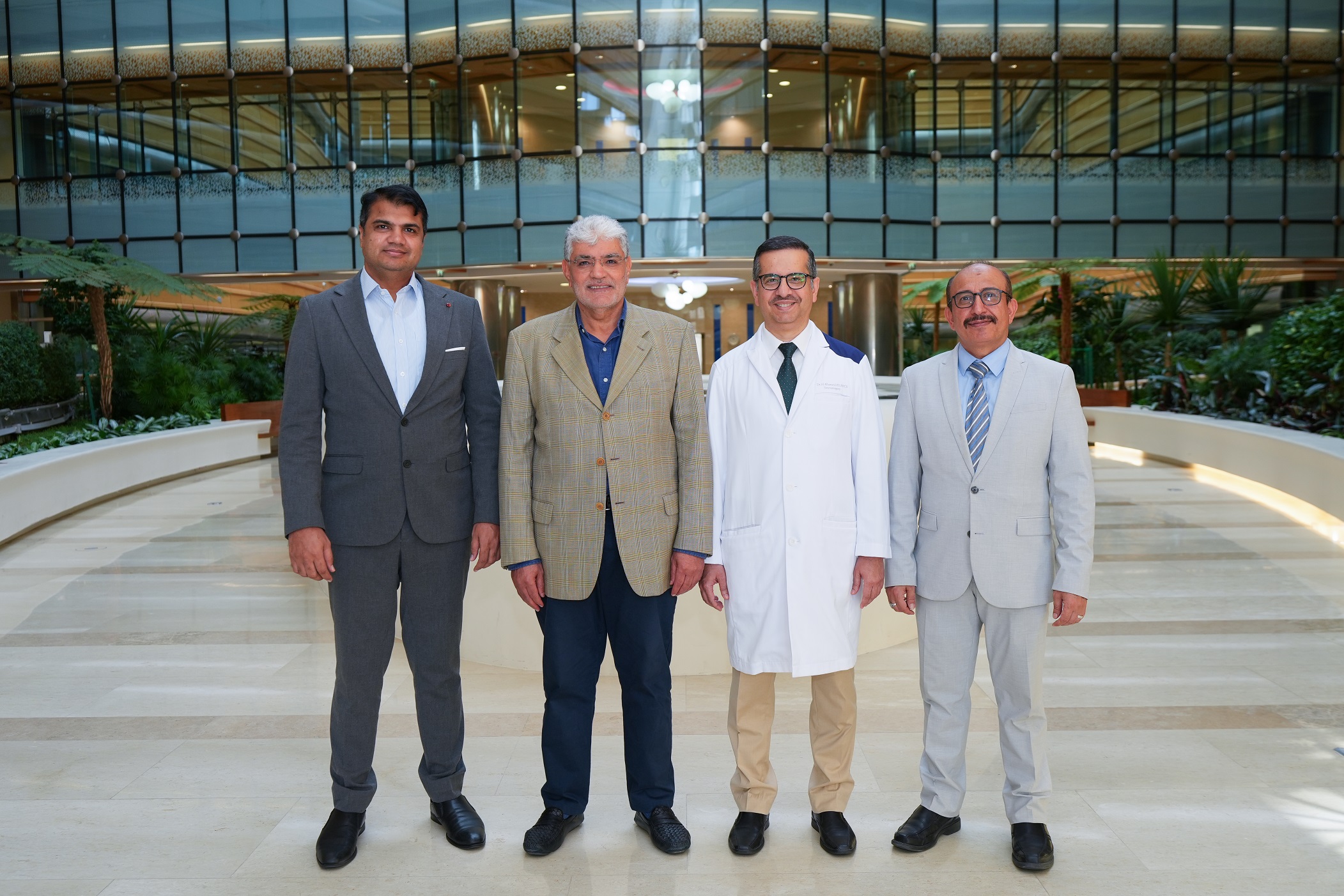
From Sidra Medicine, the project was led by Dr. Khalid Al-Kharazi, Senior Attending Physician and Director of the Pediatric Neurosurgery Fellowship program and Mr. Zafar Iqbal, Manager of Imaging Information Systems with additional support from Dr. Abdusamea Shabani, the Chair of Radiology. Prof. Khaled Al-Surimi, Department Head of Healthcare Management at the University of Doha for Science and Technology played a key role in facilitating the partnership between Sidra Medicine and the MAIDA team at Harvard Medical School.
Dr. Khalid Al-Kharazi, co-author of the study, said: “Artificial intelligence has tremendous potential to support clinical decision-making, but its effectiveness depends on how well it performs across different patient populations. Newborns have unique anatomical and clinical needs that cannot always be addressed by technologies developed for adults. This study demonstrates how existing AI models can be adapted to better support neonatal care, potentially helping clinicians assess medical images more accurately and identify issues that require timely attention.”
The research focused on assessing the positioning of endotracheal tubes, which are used to support breathing in critically ill newborns. Accurate tube placement is essential in neonatal intensive care, as incorrect positioning can lead to serious complications. Researchers investigated whether AI models originally trained to assess tube placement in adults could be adapted to identify anatomical landmarks and detect potentially incorrect tube positioning in newborns.
Using a technique known as continual learning, the research team adapted an existing AI model through sequential training using neonatal chest X-rays from participating hospitals. Each institution contributed 100-300 radiographs, allowing the model to learn from diverse patient populations without requiring the central pooling of medical imaging data. As one of the participating institutions, Sidra Medicine contributed 100 anonymized neonatal chest X-ray images to support the research.
Mr. Zafar Iqbal, co-author of the study, said: “Sidra Medicine’s participation in this international research reflects our commitment to advancing medical innovation through collaboration with leading institutions worldwide. By contributing our expertise and clinical imaging data, we are supporting research that addresses an important gap in pediatric healthcare. The findings also highlight how international partnerships can accelerate the development of AI technologies that are more inclusive of children and their specific healthcare needs.”
The findings demonstrated significant improvements in the model’s performance. Continual learning reduced the average anatomical landmark localization error to 0.67 centimetres, compared with 1.29 centimetres for hospital-specific fine-tuning and 4.30 centimetres for the original adult-trained model. The approach achieved better localization accuracy at 29 of the 30 participating sites and improved the detection of deeply positioned endotracheal tubes at 27 sites.
Dr. Abdusamea Shabani, who selected the radiographs for the study, said: “The study represents an important step toward addressing the limitations of AI technologies developed primarily for adult populations. Its findings suggest that continual learning could provide a practical approach for adapting existing medical imaging models to pediatric settings while maintaining patient data privacy.”
Dr. Khalid Al-Kharazi concluded: “Sidra Medicine’s involvement reinforces our commitment to supporting research and innovation that contribute to advancements in pediatric healthcare, both in Qatar and internationally. We also want to extend our appreciation to Professor Al-Surimi for his contribution to this impactful initiative and look forward to continued collaboration in advancing healthcare innovation and AI-driven research in Qatar and globally.”
Beyond its clinical implications, the study demonstrates the value of international collaboration in advancing medical AI. By enabling hospitals to contribute to AI model development without centralizing patient imaging data, the research presents a promising approach to improving the accessibility, reliability, and applicability of AI technologies across healthcare institutions.
Recent Posts

Related Doctors


Our Insurance Partners
Our Insurance Partners