National Pediatric Sepsis Symposium 2026

- 22 October 2026
- 7:30 am to 5:00 pm
- Sidra Medicine Auditorium
Target Audience
Download Full Programme
CPD Points : 8 hours
EARLY-BIRD REGISTRATION
Save by registering before 22 September 2026
Workshop registration limited to 20 free places during early bird registration. Choose from one of the 3 workshops that run in parallel with the session 4 which focuses on sepsis in special populations.
Overview
The most significant shift in paediatric sepsis in a generation — and what it means for your practice.
In January 2024, the Phoenix Sepsis Criteria were published in JAMA, replacing the SIRS-based definition that had stood for nearly two decades. Phoenix abandons fever and heart rate as the foundation of sepsis diagnosis, refocusing on what actually predicts poor outcomes: life-threatening organ dysfunction across four systems — respiratory, cardiovascular, coagulation, and neurological. A Phoenix Sepsis Score of ≥2 defines sepsis; a cardiovascular subscore of ≥1 defines septic shock. Validated globally, it is more accurate, more specific, and more clinically actionable than anything before it.
Alongside this, the 2026 Surviving Sepsis Campaign (SSC) guidelines have fundamentally updated bundle recommendations governing fluid resuscitation, antibiotic timing, haemodynamic monitoring, and escalation — changes with immediate implications for every paediatric clinician, nurse, and pharmacist practising today.
Sidra Medicine is bringing the architects of these guidelines and the pioneers of next-generation sepsis diagnostics to Doha for a full day of expert sessions, live case discussions, and hands-on workshops. Sidra Medicine has comprehensively revised its paediatric sepsis guidelines in direct response to Phoenix and the 2026 SSC update. Delegates will leave with the updated screening tool, the revised management algorithm, and a clear implementation roadmap.
Conference Objectives:
- Explain the role and clinical application of validated paediatric sepsis screening tools in early identification of at-risk patients
- Apply the Phoenix Sepsis Score to assess severity of illness and support timely clinical decision-making in paediatric patients with suspected sepsis.
- Integrate screening tools, severity scoring (Phoenix score), and management pathways to support timely and coordinated sepsis care across clinical settings
Target Audience
- Physicians
- Nurses
- Pharmacists
- Allied Health
- Dentists
International Keynote Speakers

Prof Luregn Schlapbach
Professor of Paediatric Intensive Care, University Children’s Hospital Zurich, Switzerland
Chair of Scientific Affairs, ESPNIC · Paediatric Surviving Sepsis Campaign · Vice Co-Chair, PICU-CONNECT
SESSION: Surviving Sepsis Campaign 2026: What Every Clinician Needs to Know
A comprehensive walkthrough of the 2026 SSC paediatric guidelines — the key bundle changes, the evidence behind them, and how to implement them in your unit from day one.
SESSION: Phoenix Criteria for Paediatric Sepsis: Problem Solved or New Challenges?
Hear from one of the criteria’s own authors on how Phoenix was derived and validated, how it compares with legacy definitions, and where its limitations remain.

Prof Enitan Carrol
Professor of Paediatric Infectious Diseases, University of Liverpool, UK
Member, SSC International Pediatric Guideline Group · SCCM Paediatric Sepsis Definitions Taskforce
SESSION: Reducing Variation and Missed Sepsis: Why Children Continue to Be Missed
Despite better guidelines, diagnostic variation and missed sepsis remain the central challenge. Prof Carrol will examine the systems and human factors driving this and present evidence-based strategies that actually close the gap.
SESSION: Early Recognition Across the Care Continuum
From primary care to pre-hospital to emergency department to PICU; a data-driven look at where recognition fails, what integrated models of early identification look like, and what quality metrics matter most.
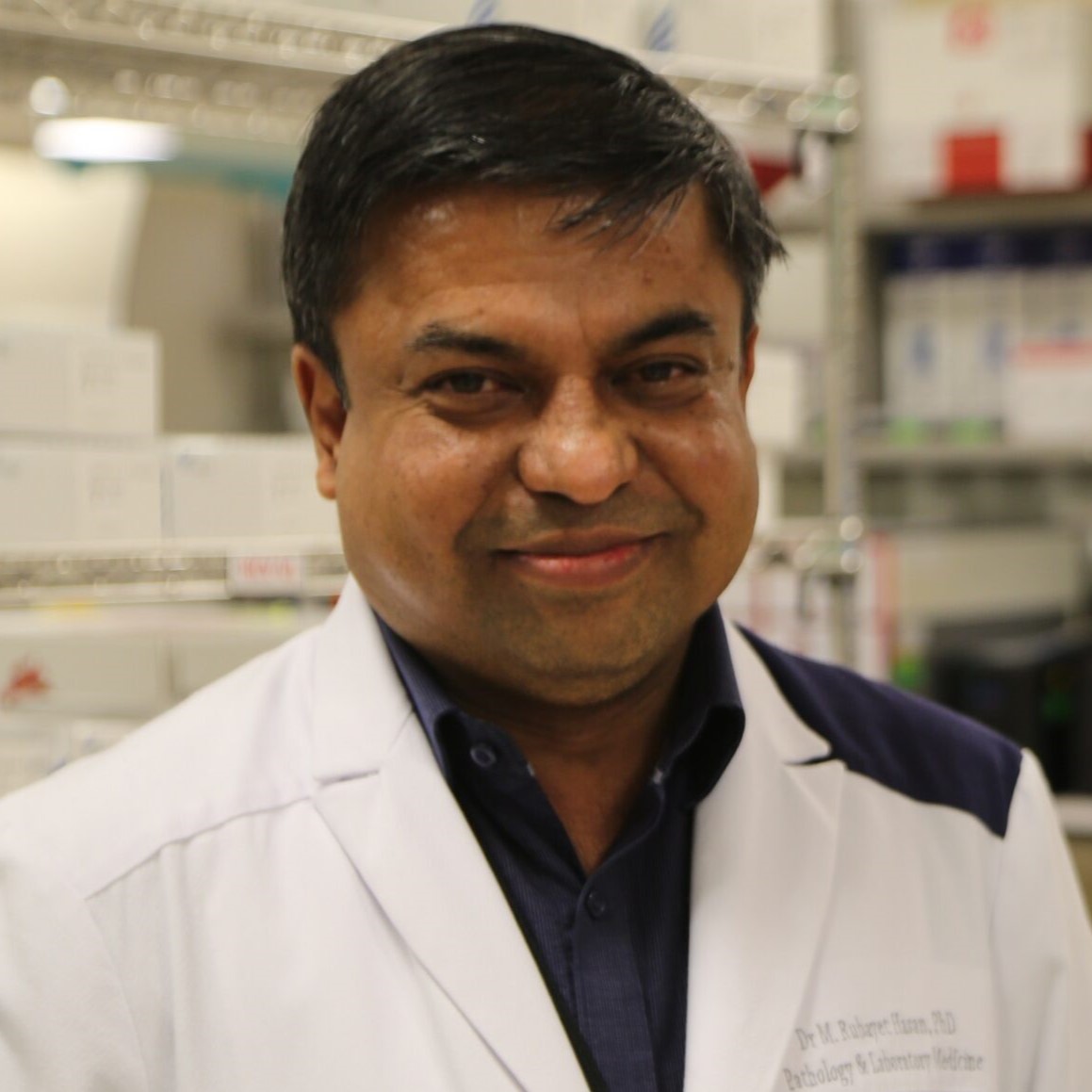
Dr Mohammad Rubayet Hasan
Clinical Microbiologist, Hamilton Regional Laboratory Medicine Program · Associate Professor, McMaster University, Canada
SESSION: Metagenomic Next-Generation Sequencing for Rapid Pathogen Identification in Sepsis
At this symposium, Dr Hasan will explore the emerging role of metagenomic sequencing in sepsis — how it outperforms conventional culture in speed and sensitivity, what it means for pathogen identification in critically ill children, and how it can transform antibiotic decision-making at the bedside.

Dr Yasser Kazzaz
Consultant Paediatric Intensivist & Cardiac Critical Care, King Abdullah Specialist Children’s Hospital, Riyadh
Associate Professor, King Saud bin Abdulaziz University for Health Sciences · Ministry of National Guard Health Affairs, Saudi Arabia
SESSION: Implementing Paediatric Sepsis Improvement Programmes
Dr Kazzaz brings the Gulf regional perspective — presenting real-world data on building and sustaining a national paediatric sepsis quality improvement programme, including what metrics moved, what changed at the bedside, and what it takes to translate guidelines into consistent clinical practice across a large healthcare system.
Hands-on Workshops
Three parallel workshops run in the afternoon — delegates pre-select one on registration. Workshop places are strictly limited.
Faculty-supervised hands-on station covering cardiac function, IVC collapsibility, lung ultrasound, and ultrasound-guided vascular access.
Participants will learn to identify CV dysfunction, utilize non-invasive and minimally invasive methods for cardiac monitoring and apply cardiac index to guide and titrate fluid resuscitation and vasoactive therapy.
Participants will apply the Phoenix Sepsis Score to real pediatric case scenarios, compare its performance with previous screening tools and existing local triggers, develop a unit-specific sepsis screening algorithm incorporating Phoenix criteria.
Program Overview
| Time | Session Title/Topic | Session-Specific Learning Objectives By the end of the session, participants will be able to: |
|
|---|---|---|---|
| 0730-0800 | Registration & Welcome Coffee | ||
| OPENING CEREMONY | |||
| 0800-0805 | Opening | Welcome & Opening Remarks Prof. Ibrahim Janahi, Chief Medical Officer, Sidra Medicine – Welcome delegates, introduce the symposium theme and Qatar’s commitment to pediatric sepsis improvement |
|
| 0805-0815 10 mins |
Patient Story | Through the Storm: My Sepsis Story Speaker: Dr. Adiba Hamad Moderator: Dr. Baseema Alhouri |
1. Humanise the burden of pediatric sepsis through a real family experience. 2. Anchor the day’s clinical content in the patient and family perspective. 3. Set the ethical and emotional tone for the symposium |
| SESSION 1 – THE SCIENCE OF SEPSIS: NEW GUIDELINES & DEFINITIONS | |||
| 0815-0845 30 mins |
Keynote | Surviving Sepsis Campaign 2026: What Every Clinician Needs to Know Speaker: Prof. Luregn Schlapbach |
1. Summarize the key changes in the 2026 SSC paediatric guidelines. 2. Identify priority recommendations for immediate clinical implementation. 3. Describe the evidence base underpinning the updated bundles |
| 0845-0915 30 mins |
Keynote | Reducing Variation and Missed Sepsis: Why Children Continue to Be Missed Speaker: Prof Enitan Carrol |
1. Quantify the burden of missed sepsis in paediatric populations. 2. Identify systems and human factors driving diagnostic variation. 3. Propose evidence-based strategies to reduce missed diagnoses |
| 0915-0930 15 mins |
Keynote | Implementing Sepsis Improvement Programmes Speaker: Dr. Yasser Kazzaz |
1. Describe key components of the national paediatric sepsis programme implemented in Saudi Arabia, including structure, strategies, and implementation processes. 2. Identify and analyze transferable lessons from the Saudi Arabian experience that can support guideline adoption and implementation in resource-similar healthcare settings. 3. Interpret measurable outcome data from the national paediatric sepsis improvement initiative, including clinical and quality indicators, to evaluate impact on patient care and system performance. |
| 0930-0940 10 mins |
Questions & Answers – Open Floor Chair: Dr. Ahmed Al-Hammadi Moderators: Dr. Dina Schnurman, Dr. Ikram Ulhaque |
||
| 0940-1005 | Morning Coffee Break & Trade Stalls | ||
| 1005-1020 15 mins |
Inauguration | Inauguration Ceremony Speaker: Prof Ibrahim Janahi |
1. Describe the strategic priorities of Qatar’s national sepsis agenda. 2. Recognize the role of national leadership and policy in advancing paediatric sepsis care, including governance, coordination, and healthcare system alignment. 3. Explain the significance of national-level initiatives in improving sepsis outcomes, with reference to Qatar’s commitment to quality, patient safety, and population health. |
| SESSION 2- NATIONAL STRATEGY, LOCAL GUIDELINES & THE CARE CONTINUUM | |||
| 1020-1035 15 mins |
Local | Qatar’s National Sepsis Strategy: A Ministry of Public Health Perspective Speaker: Dr. Rasmeh Al-Huneiti |
1. Describe Qatar’s national sepsis policy framework and governance structure, including key stakeholders, oversight mechanisms, and implementation pathways. 2. Outline the Ministry of Public Health (MOPH) priorities for sepsis surveillance and quality reporting, including key indicators and reporting systems used to monitor performance. 3. Explain the role of national sepsis guidelines in driving system-wide improvement, including their impact on standardization of care, clinical decision-making, and patient outcomes. |
| 1035-1100 25 mins |
Combined | The New Sidra Medicine Paediatric Sepsis Guidelines: From Policy to Practice Policy Context & Opening Bedside Sepsis Screening Speakers: Dr. Manu Sundaram, Mohamad Sbeity, Collette Donnelley, Dr. Nasreen Faqih |
1. Describe the structure of the newly developed Sidra Medicine paediatric sepsis guidelines, including key updates aligned with the 2026 Surviving Sepsis Campaign (SSC) recommendations. 2. Demonstrate application of the updated bedside sepsis screening tool and escalation criteria through clinical scenarios or case-based discussion. 3. Explain the stepwise management algorithm for paediatric sepsis, from emergency department triage through to paediatric intensive care unit (PICU) management. 4. Outline the implementation strategy for the sepsis guidelines, including audit processes, performance monitoring, and staff education initiatives to support sustained practice change. |
| 1100-1125 25 mins |
Keynote | Phoenix Criteria for Paediatric Sepsis: Problem Solved or New Challenges Speaker: Prof Luregn Schlapbach |
1. Explain the derivation and validation of the Phoenix sepsis score. 2. Compare Phoenix with SIRS-based and legacy definitions. 3. Critically appraise limitations of Phoenix in resource-varied and neonatal settings. |
| 1125-1145 20 mins |
Case Panel | The Deteriorating Child: A Real Case Presented by Dr. Abubaker Aied Panellists: – Dr Muhammad Islam – Dr. Baseema Alhouri |
1. Trace the real journey of a deteriorating child from primary care through ambulance, PED, and Sidra ED. 2. Identify critical decision points and time-to-recognition gaps across the care continuum. 3. Highlight what went well and what systemic changes could have shortened the time to treatment. 4. Agree shared referral standards and communication protocols across PHCC, HMC, PEC, and Sidra. |
| 1145-1155 10 mins. |
Questions & Answers Chair: Prof. Ibrahim Janahi Moderator: Dr. Buthaina Al-Adba |
||
| 1155-1250 | Lunch Break, Dhuhr Prayer & Poster Viewing | ||
| SESSION 3 – SYSTEMS, TECHNOLOGY & QUALITY IMPROVEMENT | |||
| 1250-1310 20 mins |
Keynote | Metagenomic Next-Generation Sequencing for Rapid Pathogen Identification in Sepsis Speaker: Dr. Muhammad Rubayat Hasan |
1. Describe the principles of metagenomic next-generation sequencing (mNGS) and its application in clinical sepsis diagnostics. 2. Present evidence on turnaround time, sensitivity and specificity of mNGS versus conventional culture. 3. Discuss implementation challenges, cost, and governance frameworks for mNGS in a paediatric critical care setting. |
| 1310-1325 15 mins |
Local | Whole-Genome Sequencing for AMR at Sidra: Seven Years of Outbreak Investigation Speaker: Dr. Andres Lopez |
1. Summarise seven years of WGS-guided outbreak investigation experience at Sidra Medicine. 2. Demonstrate how WGS has changed antimicrobial resistance surveillance and infection control responses. 3. Outline the integration of WGS data into clinical sepsis management pathways at Sidra. |
| 1325-1340 15 mins |
Local | Antibiotic Stewardship, Pharmacy Optimization & HAIs in Paediatric Sepsis Speakers: Dr. Abdul Wahid Zaniel, Dr. Dalia Ahmed |
1. Characterize the relationship between HAIs and sepsis outcomes 2. Outline antibiotic stewardship principles within the 2026 bundle framework. 3. Present PK/PD principles for optimizing empiric dosing in paediatric sepsis. 4. Describe pharmacy-led de-escalation and medication reconciliation protocols. |
| 1340-1350 10 mins. |
Questions & Answers Chair: Dr. Jason Ford Moderators: Dr. Khalid Al Elithy, Dr. Ricardo Branco |
||
| 1350-1410 | Afternoon Coffee Break & Trade Stalls | ||
| SESSION 4 – SPECIAL POPULATIONS, PARALLEL WITH WORKSHOPS A, B & C | |||
| 1410-1425 15 mins |
Local | Maternal Sepsis and Implications for the Neonate Speaker: Dr. Khawla Ismail |
1. Describe the pathophysiology of maternal sepsis and transplacental effects on the foetus and neonate. 2. Identify risk factors for neonatal sepsis following maternal infection. 3. Outline joint obstetric–neonatal sepsis care pathways and alert protocols at Sidra Medicine. |
| 1425-1440 15 mins |
Local | Early Identification of Suspected Neonatal Sepsis – A Nurse-led Approach Beyond Blood Culture Speaker: Thea Marie Rivera Robleza |
1. Identify subtle, early clinical shifts away from the infant’s individual baseline before cardiorespiratory collapse. 2. Interpret blood culture volume pitfalls, CRP/PCT kinetic delays, and the role of continuous predictive monitoring (HRC/HeRO) 3. Apply a standardized 8-point assessment framework to synthesize maternal risks and objective bedside trends 4. Communicate assertively using SBAR/CUS and actively drive the 36-hour antibiotic timeout review |
| 1440-1455 15 mins |
Local | Sepsis in Oncology and Post-BMT Patients on Newer Immunomodulators Speaker: Dr. Shaikha Al Qahtani |
1. Define the unique pathophysiology of sepsis in immunocompromised paediatric patients. 2. Discuss the impact of newer immunomodulators — checkpoint inhibitors, CAR-T, JAK inhibitors — on sepsis presentation and response. 3. Present evidence-based modifications to standard sepsis bundles for oncology and post-BMT patients |
| 1455-1510 15 mins |
Local | Early Recognition Across the Care Continuum: Evidence and Best Practice Speaker: Prof Enitan Carrol |
1. Present evidence on time-to-recognition and outcomes across care settings. 2. Define the integrated model of sepsis recognition spanning primary care, pre-hospital, and ED. 3. Propose quality metrics for measuring pathway effectiveness across the continuum. |
| 1510-1525 15 mins |
Local | CLABSI – to salvage the line or replace Speaker: Dr. Walid Mubarak |
1. Describe the conundrum regarding the salvage or removal of line in CLBASI 2. Present data on CLABSI 3. Discuss how to prevent line sepsis |
| 1525-1535 10 mins. |
Questions & Answers Chair: Dr. Khalid Ansari Moderators: Dr. Sanoj Ali, Duane Wong |
||
| PARALLEL WORKSHOPS | |||
| 1410-1535 1.5 hrs |
Session A Point-of- Care Ultrasound (POCUS) in Sepsis Faculty-supervised hands-on station Facilitators: Dr. Muhammad Islam, Dr. Phani Kiran Yajamanyam, Dr. Haytham Ibrahim, Dr. Khalid Aliyafaei |
1. Identify POCUS applications in sepsis: cardiac function, fluid responsiveness, IVC collapsibility, lung ultrasound. 2. Perform a structured RUSH protocol examination on a simulator. 3. Integrate POCUS findings into real-time hemodynamic decision-making. 4. Discuss the limitations and pitfalls of POCUS in paediatric populations |
|
| Session B Cardiac Index Monitoring in Septic Shock Hands-on patient scenarios Facilitators: Dr. Ikram Haque, Dr. Aravanan Chakrapani |
1. Recognise cardiovascular dysfunction in paediatric septic shock 2. Apply non-invasive and minimally invasive cardiac output monitoring 3. Integrate cardiac index data into titrated vasoactive and fluid therapy |
||
| Session C Early Sepsis Screening — Phoenix Criteria Scenarios Simulation-based learning Facilitators: Prof. Luregn Schlapbach, Dr. Nesreen Faqih, Dr. Adiba Hamad |
1. Calculate the Phoenix Sepsis Score for a series of real paediatric case scenarios. 2. Compare Phoenix with prior screening tools and current local triggers. 3. Design a unit-level screening algorithm incorporating Phoenix. 4. Identify patient populations where Phoenix has known limitations |
||
| FINAL SESSION – CLOSING PANEL DISCUSSION & CEREMONY | |||
| 1535-1630 55 mins |
Panel | Reducing the Risk of Sepsis- Myth or reality Case to be presented by Dr. Ruwa Mohamed Panellists: – Prof Luregn Schlapbach – Prof Enitan Carrol – Dr Yasser Kazzaz – Gloria Kamba – Dr. Muhammad Islam – Dr. Shabina Khan – Dr. Suzan Nasser Chair: Dr. Eman Maslamani Moderators: Dr. Harris Huda, Dr. Manu Sundaram |
1. Distinguish preventable from non-preventable paediatric sepsis 2. Recognise antimicrobial resistance as an emerging prevention agenda 3. Apply a prevention lens to local practice |
| 1630-1650 | Action Points, Acknowledgements & Certificate of Attendance Speakers: Dr. Manu Sundaram |
Announce key action points and next steps; acknowledge speakers, faculty, and sponsors; distribute certificates of attendance; launch the Qatar Paediatric Sepsis Network commitment statement. | |


Our Insurance Partners
Our Insurance Partners