Manuel Corpas, PhD, FHEA
Principal Investigator
Laboratory of Genomic Medicine
- Email: MCorpasLopez (@) sidra.org


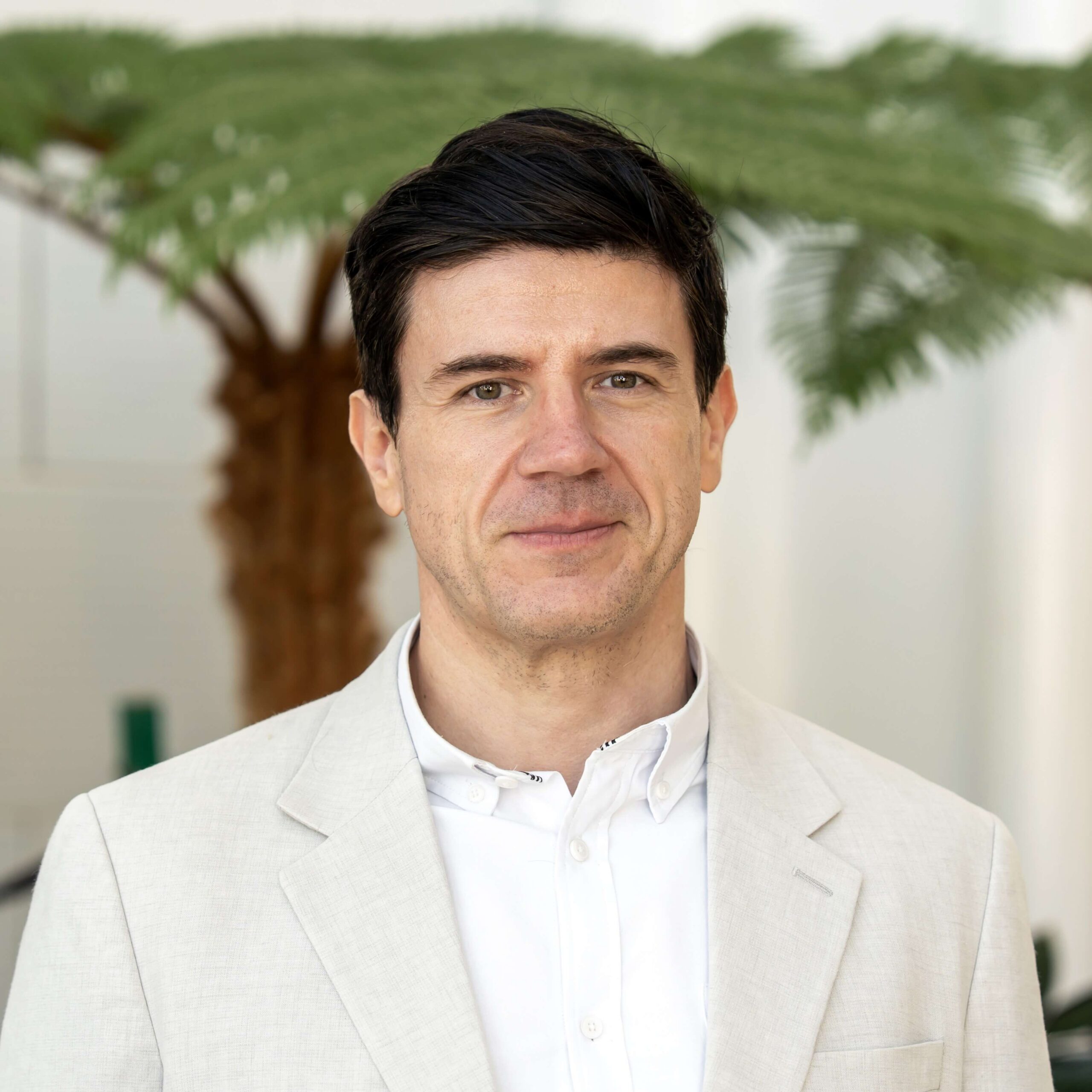
Dr. Manuel Corpas is a Principal Investigator at Sidra Medicine, Doha, Qatar, where he leads the Laboratory of Genomic Medicine in the Translational Medicine department. He earned his BSc in Biomedical Sciences at the University of Navarre, Spain, and his MSc in Bioinformatics and PhD in Computer Science at the University of Manchester, UK. Before joining Sidra Medicine in October 2026, he was Senior Lecturer in Genomics and Course Leader of the MSc in AI and Digital Health at the University of Westminster, London (2021 to 2026), where he remains a Visiting Researcher, and a Fellow of The Alan Turing Institute (2024 to 2026). At the Wellcome Sanger Institute (2008 to 2012) he contributed to DECIPHER, a community resource for the clinical interpretation of rare variants in developmental disorders, and he was then a Project Leader at The Genome Analysis Centre, now the Earlham Institute (2012 to 2016). In 2026 he named and defined agentic genomics in a Cell Genomics Perspective and founded ClawBio, an open-source library of bioinformatics skills that AI agents can run reproducibly
The Laboratory of Genomic Medicine studies the genetic basis of rare disease and autism in patients at Sidra Medicine. The group uses whole-genome sequencing of families with Mendelian disorders for gene discovery, supported by long-read sequencing, RNA sequencing and metabolomics, and contributes to BARAKA-Qatar, Sidra Medicine’s autism genomics programme. It also characterises genetic variation in Arab and Qatari populations, which are under-represented in global databases. Dr. Corpas’s own research is on agentic genomics, in which AI agents carry out multi-step genomic analyses. He builds these systems on authored skills with tests, provenance and versioned releases, so that each result can be audited and reproduced, and benchmarks where they succeed and fail, for example in pharmacogenomic interpretation. Equity across ancestries is treated as a measured design requirement rather than an aspiration. The laboratory’s aim is genome interpretation that is reproducible, auditable and valid for the populations Sidra Medicine serves.
Sasirekha Palaniswamy, PhD
Senior Clinical Scientist, Precision Medicine
Email: spalaniswamy@sidra.org
Aljazi Al-Maraghi, MD
Staff Scientist
Email: aalmaraghi@sidra.org
Najeeb Syed
Staff Scientist
Email: nsyed@sidra.org
Shahzad Ahmad, PhD
Staff Scientist
Email: SAhmad1@sidra.org
Waleed Aamer, PhD
Staff Scientist
Email: waamer@sidra.org
Geethanjali Devadoss Gandhi
Senior Post Doctoral Fellow
Email: gdevadossgandhi@sidra.org
Mona Abdi
Post Doctoral Fellow
Email: MAbdi1@sidra.org
Njoud Al-Naama
Post Doctoral Fellow
Email: nalnaama@sidra.org
Rulan Shaath
Post Doctoral Fellow
Email: RShaath@sidra.org
Saba Elhag
Research Specialist IV
Email: SElmubarakElhag@sidra.org
Omayma Al-Saei
Research Specialist III
Email: oalsaei@sidra.org
Sheema Hashem
Research Specialist II
Email: shashem@sidra.org
Selected Publications (*corresponding author):
- Corpas M*, Iacoangeli A, Bourdenx M, et al., Fatumo S. Authored skills improve accuracy in agentic pharmacogenomics but do not establish end-to-end clinical validation. Cell Genom. In press (accepted 6 November 2026).
- Corpas M*, Guio H, Fatumo S*. Agentic genomics: From pipeline automation to autonomous validation. Cell Genom. 2026;6(8):101305. doi: 10.1016/j.xgen.2026.101305.
- Corpas M*, Iacoangeli A. Benchmarking large language models for extracting biobank-derived insights into health and disease. PLoS Comput Biol. 2026;22(4):e1014224. doi: 10.1371/journal.pcbi.1014224.
Our Insurance Partners
Our Insurance Partners