How to Care for Your Child with Metatarsal Fracture
This leaflet explains how to care for your child after a metatarsal fracture (a broken bone in the foot). It explains what causes this injury, the signs to look for, how doctors diagnose and treat it, and what you can do at home to help your child recover.
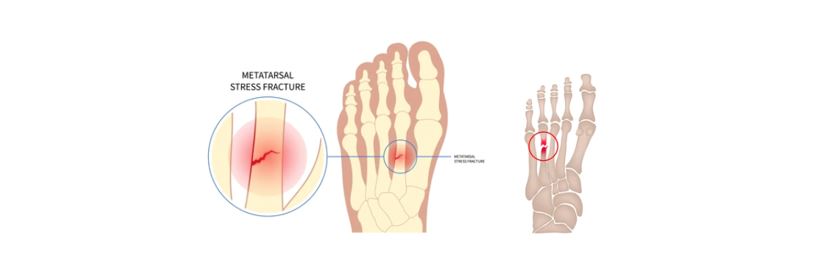
What is a metatarsal fracture?
Your child has five long bones in each foot. Each bone connects to one of the toes. These bones are called metatarsals. A metatarsal fracture means that one or more of these bones has cracked or broken.
A metatarsal fracture may happen when your child:
- Falls or twists their foot.
- Has a heavy object fall on their foot.
- Injures their foot during sport or through repeated stress on the foot.
Your child may have:
- Foot pain, especially when standing or walking.
- Swelling or bruising around the injured area.
- Difficulty standing or putting weight on the injured foot.
- Tenderness or pain when the injured area is touched.
Your child’s doctor will examine the foot and ask how the injury happened. Your child will usually need an X-ray to confirm the fracture.
Treatment depends on where the bone is broken and how serious the break is. Most metatarsal fractures heal well with support and time.
- Your child may need a partial cast (back slab), firm shoe, or a walking boot for about 4 to 6 weeks.
- The healthcare team will tell you if your child may walk on foot or should use crutches.
- If your healthcare team says it is safe, you can give your child paracetamol or ibuprofen. Always follow the instructions on the medicine label. Some broken bones are more serious and may need surgery or follow-up with a bone specialist
- Rest: Help your child avoid running, sport, and heavy activity until the doctor says it is safe.
- Use a cold pack: Wrap a cold pack in a cloth and place it on the injured area for 15 to 20 minutes every two to three hours during the first two days. Do not place ice directly on the skin.
- Raise the foot: When your child is resting, put the foot on pillows to help reduce swelling.
- Care for the back slab, boot, or shoe: Keep it dry and cover it during bathing. Do not place any object inside it. If it becomes slightly wet, gently dry it with a hairdryer on the cool setting. Do not use heat.
- Check your child’s toes every day: Make sure they are warm and pink and that your child can move them.
- Follow-up: Attend the appointments arranged by your child’s healthcare team. If your child has a back slab, follow-up is usually planned at around four weeks. More complex fractures will be followed by the orthopedic team.
- Return to activity: Your child should return to sport or full activity only when the doctor confirms it is safe.
Please seek medical advice if your child:
- Has pain or swelling that is not getting better
- Is having difficulty using the back slab, boot, shoe, or crutches as advised, or you are unsure about the follow-up plan.
- Has pain or swelling that is getting worse even after treatment.
- Toes became pale, cold, numb, or tingly.
- Cannot move their toes.
- Has a back slab or boot that becomes damaged, loose, wet, or has bad smell.
- Develops a fever.
Our Insurance Partners
Our Insurance Partners